What is the good life?
Why does this matter for our organization?
At base, it matters, because it matter to at least some - if not all - of your employees.
In our work in our various organizations we perform all sorts of tasks. Part of the value we create concerns our individual welfare in terms of remuneration. Another valuable role that our work in these organizations plays though, is in establishing a place where we can actually engage with others.
This matters - as these spaces of engagement are actually an important part of living a good life.
Generally, these sorts of ideas are not discussed openly in the business, organizational, or design literature - left instead to discussions of ethics and theology - yet as spaces of human interaction they are by definition spaces that impact on who we are and how we live our lives.
Here at Archetekt - one of our major goals is to bring these discussions back to the mainstream.
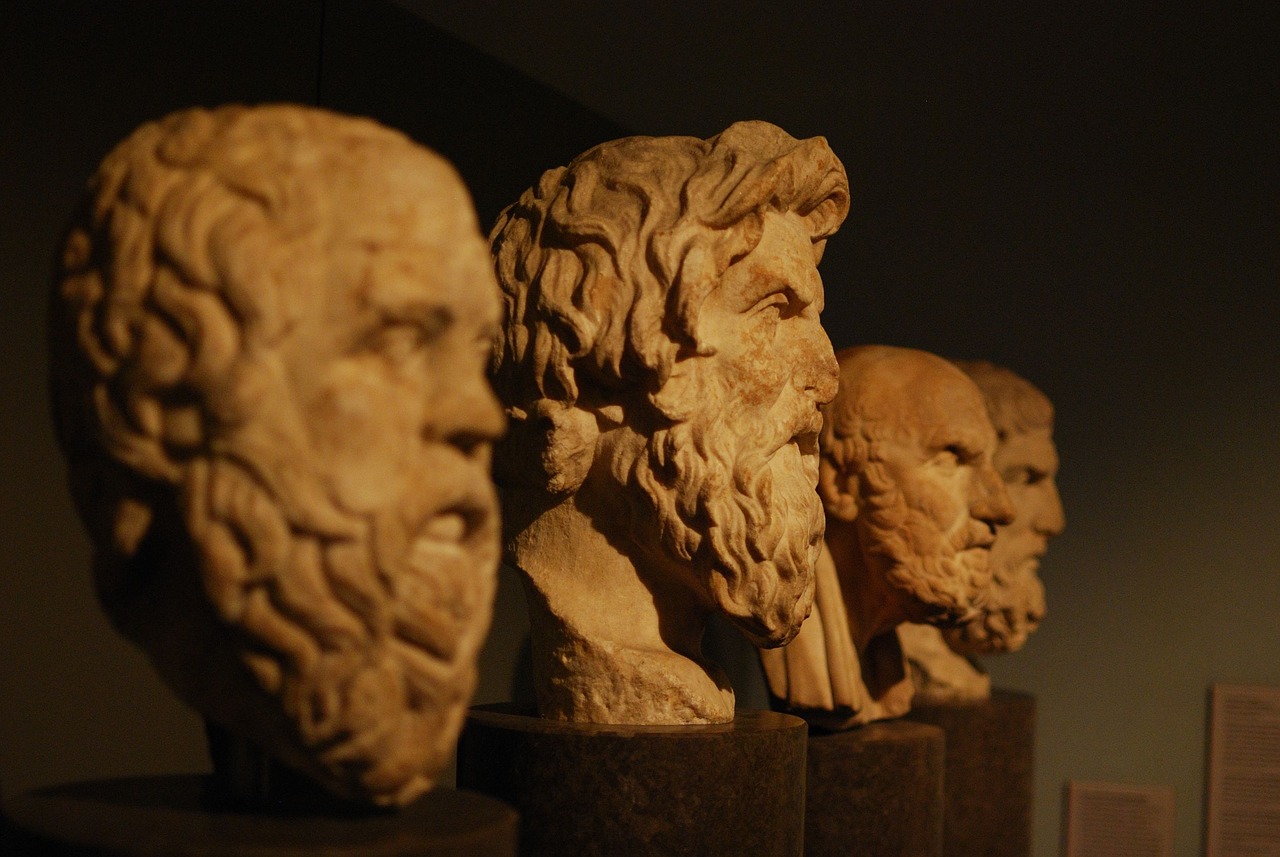
Our organizations are necessarily human spaces - so we need to address all aspects of what it is to be human - even if traditionally these types of discussions are ignored in our contemporary business literature and work practices.
It is towards these more ‘human’ questions that we aim to devote time in our ‘Being Human’ section of the blog. Following on from our earlier discussion of what it means to be a Beautiful Organization, today we look at what is it that we need to do to live a ‘good life’ – whatever that is?
While we can’t answer exactly what it is that each of us needs to lead the best life that each of us is able to lead, what we are able to talk about in this post is something we’ve learned over the years which is the role that others, or specifically our engagement with others, can play in this process. Lots of traditions from around the world talk about this – the need for us each to engage with others to lead a fully human life. That is, a life well-lived. This engagement creates the opportunities for us to practice the characteristics that make us human!
In classical Athenian moral philosophy the ability to live a truly human life was dependent on our ability to live as individuals within society. The achievement of the eudaimonia (the life well lived) was only able to be achieved through our participation within society. So, in a famous piece in his Politics the Athenian philosopher Aristotle argued that:
He who is unable to live in society, or who has no need because he is sufficient for himself, must be either a beast or a god (I.1253a27).
What Aristotle is talking about here is the zoon politikon (the political life - by which he measn social life as opposed to family life). Without engaging with others, individuals would not be able to practice the moral virtues required to live a truly human life. As an example; without someone to be compassionate to, one could not learn to be properly compassionate.

Looking at this in a very different light, we can see similar approaches to a need to participate in society to be a complete human being in a number of societies in the Highlands in Papua New Guinea. In these societies, as Marilyn Strathern helped us understand in her work Gender of the Gift, Melanesian individuals are:
constituted by exchange of food, labor, or sexual interest, mediated through specific social relations…[so that people]…have a constant effect on the health of others and susceptible themselves to the intentions and acts of others.(1987: 243).
In saying this, Marilyn Strathern is merely re-stating in a different form what Aristotle was saying over 2,000 years ago. In this case she is arguing that, in the Papua New Guinean case, it’s only through engaging with others that we become fully human! Engaging with others us allows us to develop the skills and practices that underpin being human.
We can see the negative effects of this, that is a lack of engagement with others, in the work of sociologist Emile Durkheim. It’s over a hundred years now since Emile Durkheim identified the link between increasing rates of suicide and the social dislocation of individuals who, while living in the city, were effectively living without social ties. We see similar approaches in the modern West when we talk about being alone in the city or alone in the crowd. It’s not enough that we merely live ‘in’ society, rather we need to ‘participate‘ in society.
Even Buddha’s famous ‘middle way’ helps us understand the importance of our engagement with others. While Gautama Buddha followed the ascetic path for many years enlightenment only came upon his realization that true wisdom came from walking a ‘middle path’ between asceticism and extreme renunciation and over-indulgence. Gautama Buddha found enlightenment, at least in part, by engaging with the world and those who lived in it with him.

What all of these traditions do is help provide us with a greater understanding of how engaging with others can help us be more fully human which is, after all, all we can hope for in leading a ‘good life’.
While we can’t give any specific advice to anyone on what it is that ‘they’ need to do to live a good life the collected wisdom of many traditions would tend to suggest that an important part of living a ‘good life’ is engaging with one another. Our flourishing as individuals ‘in-the-world’ then is dependent, in part at least then, on our engagement with others. for, it is in this engagement that we develop the practices - compassion, understanding, and wisdom amongst others - that only come through our engagement with others.
A life of flourishing and richness is thus one in which we engage with others. By engaging with others we help ourselves learn how to live a truly human life. In this respect the organizations in which we work play an important role in our well-being as they provide us spaces in which we are able to interact with others.
We need to remember then, that the value that we create in our organizations comes in many forms and at many levels. Creating purpose for our employees and others through these spaces is an important part of being an effective and well-functioning organization. We always ought to keep at the front of our mind that our organizations can - if designed well - be spaces to help us live a life well-lived.
Images courtesy of: Pixabay


